Treatments:
Root Canal Treatment in Walton on the Hill, Tadworth
Gentle, effective root canal treatment in Walton on the Hill, Tadworth – relieving pain, removing infection and saving your natural tooth so you can smile and chew comfortably again.

Gentle, effective root canal treatment in Walton on the Hill, Tadworth – relieving pain, removing infection and saving your natural tooth so you can smile and chew comfortably again.
If you’ve been told you need a root canal, it’s understandable to feel a little anxious. But thanks to modern techniques and our gentle, experienced approach, the treatment is far more comfortable – and far less intimidating – than many people expect. At our practice in Walton on the Hill, Tadworth, we offer effective, pain-free root canal therapy designed to save damaged teeth and restore your comfort.
Root canal treatment is one of the most effective ways to treat tooth infection and avoid extraction. By removing the source of infection inside the tooth and sealing it with care and precision, we can help you keep your natural tooth for years to come – often with very little discomfort and a fast recovery. If you thinks you need a root canal treamtnet, the best place to start with us is to book a Chek-up so that we can fully assess your treatment needs and provide tailored avice to you.
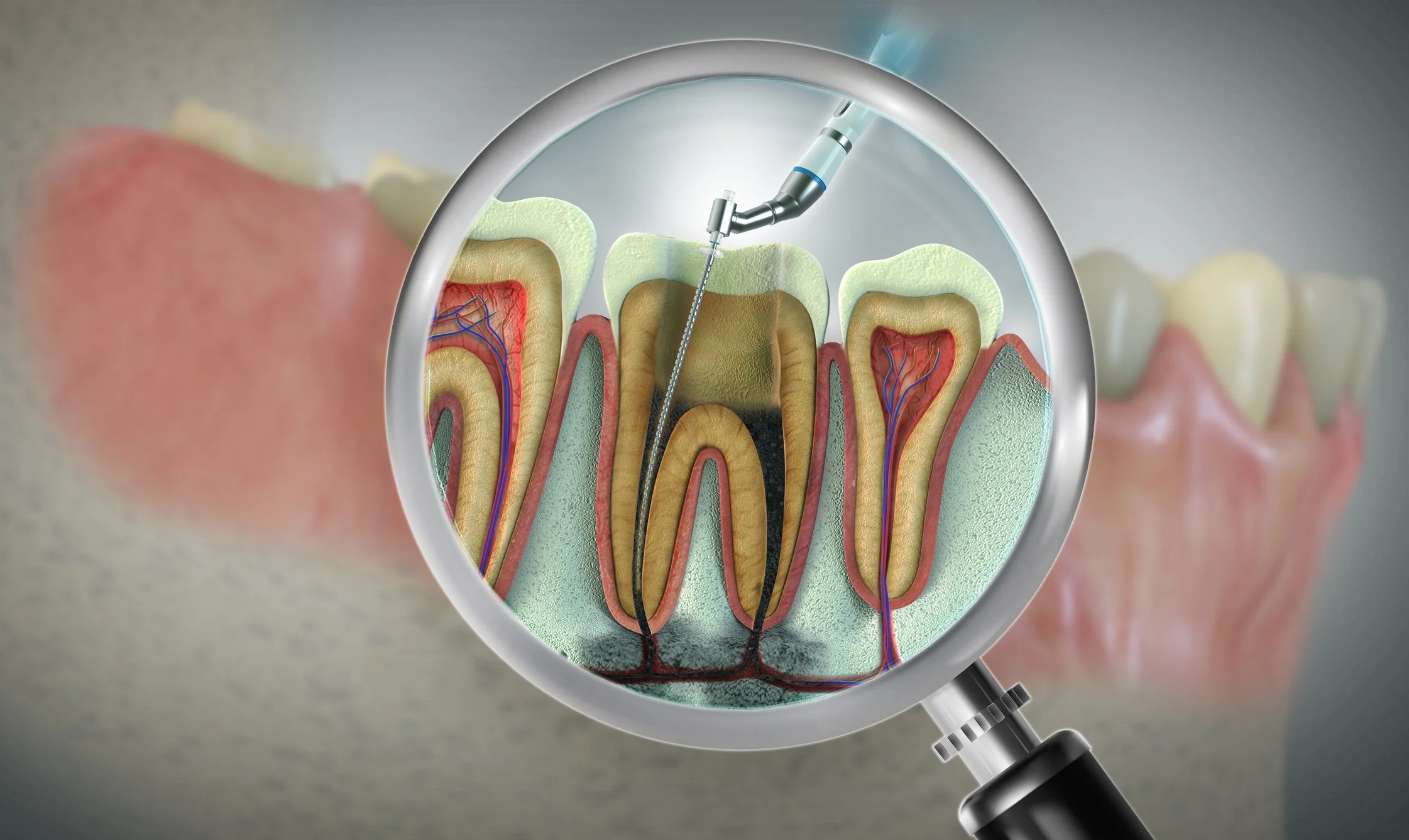
A root canal (also known as endodontic treatment) is used when the pulp inside a tooth becomes infected or inflamed. This can happen due to deep decay, cracks, trauma, or a failing filling. Left untreated, the infection can spread and lead to severe pain, swelling, or even tooth loss.
The treatment involves:
Gently removing the infected or damaged pulp
Cleaning and disinfecting the root canals
Sealing the space to prevent further infection
Restoring the tooth with a filling or crown
Far from being something to fear, root canal therapy is a highly successful treatment that helps you avoid more serious problems – and often provides immediate relief from pain or discomfort.
You may need root canal treatment if:
● You have a persistent toothache, especially when biting or applying pressure
● You’re experiencing sensitivity to hot or cold that lingers
● The gum around a tooth is swollen or tender
● A tooth is discoloured or darkened
● You notice a small bump or abscess on the gum near a tooth
● There’s a history of deep decay, repeated dental work, or trauma to the tooth
In some cases, there are no obvious symptoms, which is why regular dental check-ups are so important. If we suspect a tooth is infected, we’ll take X-rays and explain the findings clearly so you understand your options.

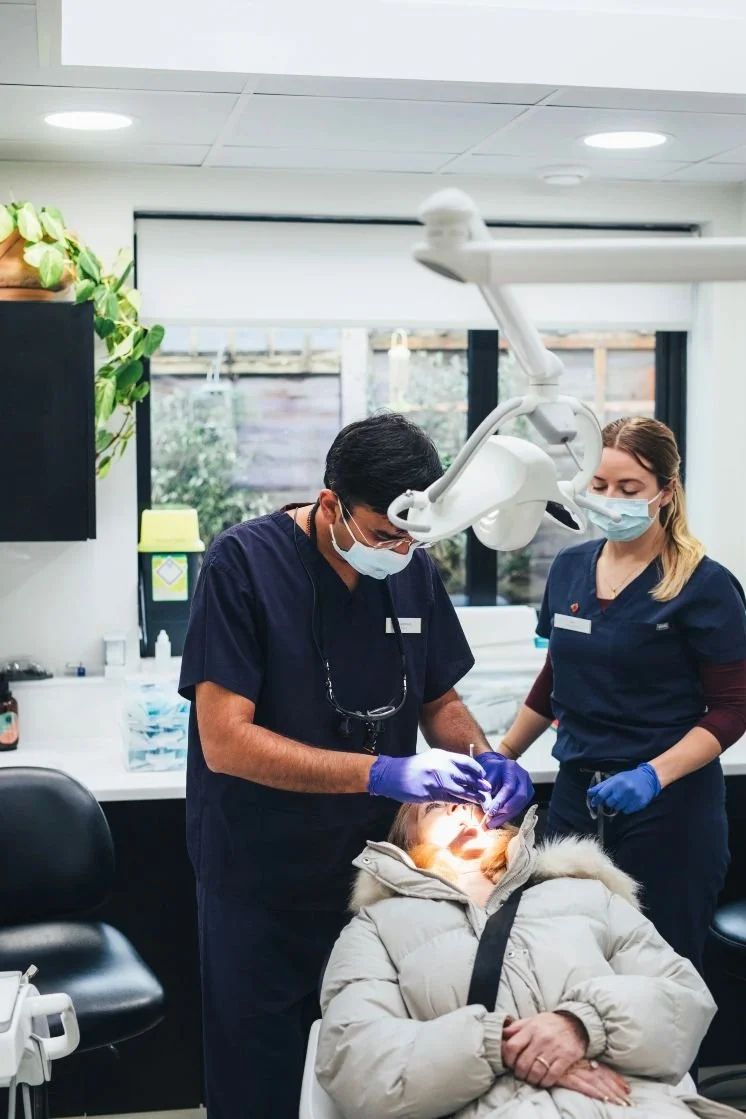
Root canal therapy is typically completed in one or two visits, depending on the complexity of the case. We’ll make sure you feel fully informed and at ease from the start.
Here’s how the process usually works:
1. Local anaesthetic is applied to fully numb the area – you won’t feel pain during the procedure
2. A small opening is made to access the inside of the tooth
3. The infected pulp is removed, and the canals are cleaned and shaped
4. The space is filled and sealed with a special material
5. In most cases, the tooth is restored with a crown or filling to protect it long term
You’ll be able to go home the same day and resume most normal activities shortly after. Mild discomfort or tenderness afterwards is normal and usually settles within a day or two.
One of the most common misconceptions about root canal treatment is that it’s painful. In reality, most patients say it’s no more uncomfortable than having a filling. In fact, root canal treatment is designed to relieve pain – not cause it.
We use modern anaesthetic techniques and take a calm, patient-first approach throughout. If you’re nervous, please let us know – we’ll take extra time and care to ensure you feel comfortable and fully supported.
We believe that preserving your natural teeth is almost always the best option. Root canal treatment allows us to do exactly that – saving a tooth that would otherwise need to be removed, and avoiding the need for a denture, bridge or implant.
In most cases, a tooth that’s had a root canal can function for many years, especially when it’s properly restored with a crown and cared for with good oral hygiene and regular dental visits.
If your tooth is severely damaged or a root canal isn’t viable, we’ll talk you through your other options, such as tooth implants, and help you make an informed decision.

Experience and precision – Our team has carried out many successful root canal treatments and re-root canal treatments with excellent long-term results
Patient-first approach – We take time to explain every step, answer your questions, and ensure you feel comfortable throughout
Modern techniques – We use up-to-date materials and instruments for effective, predictable results
Gentle care in a calm setting – Whether you’re nervous or simply want reassurance, we provide treatment in a quiet, supportive environment
Integrated care – If your tooth requires a crown after treatment, we’ll plan and place it in-house for a seamless experience
In most cases, yes. Saving your natural tooth is usually the best option for your bite, speech, jawbone health, and smile. While extractions may seem quicker or simpler, they often require follow-up treatments like implants or bridges. Root canal treatment allows you to keep your tooth – often for many years.
Most treatments take one to two visits, each lasting 45 to 90 minutes, depending on the tooth and extent of the infection. Molars have more canals and may take slightly longer, while front teeth are often more straightforward. We’ll advise you on the expected timescale before we begin.
In many cases, yes. A crown helps protect and strengthen the tooth after the inner structure has been treated. It also restores the tooth’s shape and appearance. We'll assess the condition of your tooth and discuss whether a crown or filling is most appropriate.
With proper care, a tooth that’s had a root canal can last 10–15 years or more. Good oral hygiene, regular check-ups, and avoiding hard foods or grinding can all help extend the life of the tooth, as well as proper protection for the tooth in the form of a crown. We’ll monitor it as part of your ongoing dental care.
As a private dental practice, we offer longer appointments, modern materials, and a more personalised experience than standard NHS treatments. This allows us to provide higher quality care and continuity across the full course of treatment, including any necessary crowns or follow-up.tion
